
## Introduction
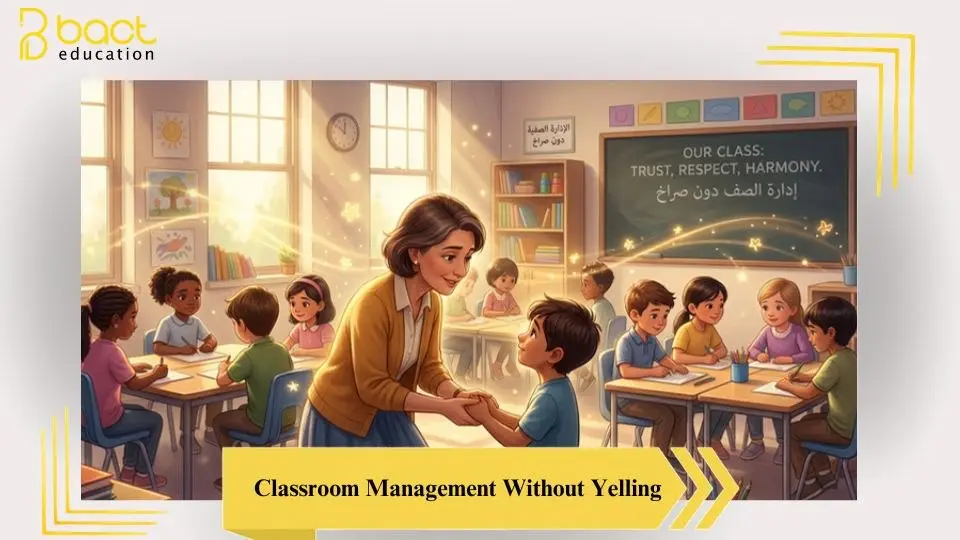
Yelling is a common method some teachers use to control their classrooms, but it often backfires, increasing stress, weakening mutual respect, and reducing student motivation. This article presents effective strategies for managing a classroom without raising your voice.
## Strategies for Yell-Free Classroom Management
### 1. Build Positive Relationships
When students feel their teacher cares about them as individuals, they become more cooperative. Take time to listen to them, learn about their interests, and show appreciation for their efforts.
### 2. Establish Clear Rules and Expectations
From day one, discuss classroom rules with students and make them visible. When everyone knows what is expected, the need for yelling reminders decreases.
### 3. Use Non-Verbal Cues
Visual signals (such as raising a hand, turning off the lights, or clapping a pattern) can alert students without a single word. Eye contact and standing next to a distracted student are very effective.
### 4. Change Tone and Volume
Instead of yelling, try speaking in a calm, low voice. Students often quiet down to hear what the teacher is saying. A pause in speech also captures attention.
### 5. Positive Reinforcement
Praise good behavior publicly and specifically. When students notice that calmness and attentiveness are valued, they will imitate that behavior.
### 6. Address Problems Calmly
When unwanted behavior occurs, speak with the student privately and ask about the reason behind it. Collaborative problem-solving builds self-responsibility.
### 7. Create an Engaging Learning Environment
Boredom is a major cause of misbehavior. Plan interactive, varied lessons that cater to different learning styles, and student distraction will naturally decrease.
## Conclusion
Yelling is not necessary for successful classroom management. On the contrary, a calm, respectful environment fosters genuine learning and positive relationships. Remember, a quiet teacher is not weak; they are a wise leader who guides by example, not by fear.
