
## Introduction
Justice in education is one of the fundamental pillars for building prosperous and sustainable societies. It means that every individual, regardless of their social, economic, ethnic, or geographic background, has an equal opportunity to receive a quality education that develops their abilities and fulfills their aspirations. Justice is not limited to mere equality in providing school seats; it goes beyond that to consider individual differences and provide appropriate support for each learner.
## The Concept of Justice in Education
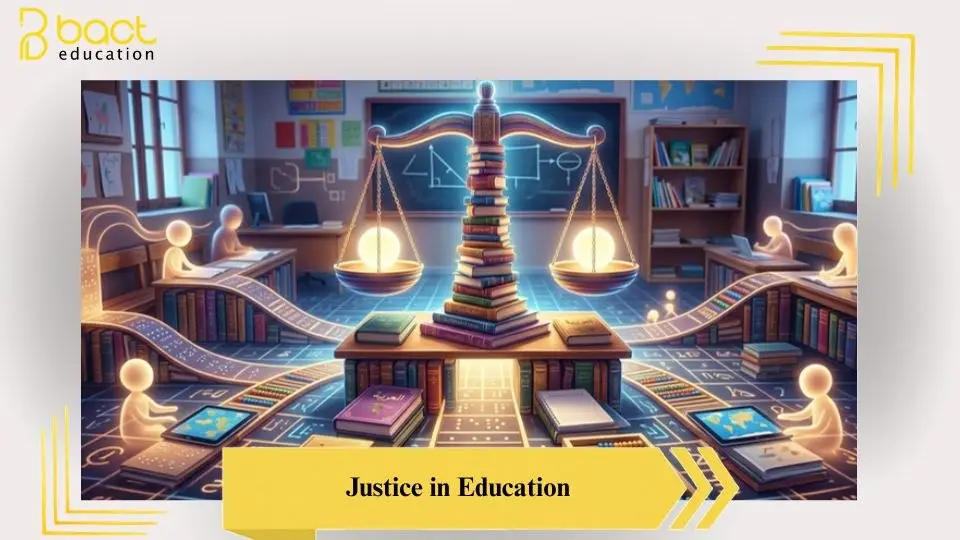
Educational justice means that each student is treated according to their needs, not that everyone is treated the same way. Equality may mean giving everyone the same thing, but justice means giving each person what they need to succeed. This requires distributing educational resources (such as qualified teachers, technology, books, and infrastructure) in a way that addresses existing gaps.
## The Importance of Justice in Education
1. **Reducing poverty and social inequality**: Fair education breaks cycles of inherited poverty and gives children from disadvantaged families a real chance to improve their circumstances.
2. **Enhancing social cohesion**: When all members of society feel that the education system treats them fairly, class and racial tensions decrease, and a sense of belonging and citizenship increases.
3. **Achieving sustainable development**: The fourth Sustainable Development Goal of the United Nations explicitly calls for “ensuring inclusive and equitable quality education and promoting lifelong learning opportunities for all.”
## Challenges to Achieving Justice in Education
– **The rural-urban gap**: Rural and remote areas often suffer from a lack of schools, infrastructure, and qualified teachers.
– **Economic disparity**: Students from low-income families lack private tutoring, digital devices, and a quiet home environment for studying.
– **Disabilities and learning difficulties**: Many schools do not provide specialized equipment or programs for students with special needs.
– **Gender-based discrimination**: In some societies, girls still receive fewer educational opportunities than boys.
## Strategies for Achieving Justice in Education
1. **Fair school funding**: Directing additional budgets to schools in disadvantaged areas.
2. **Targeted support programs**: Such as providing school meals, free books, and transportation for needy students.
3. **Professional teacher training**: Preparing teachers to accommodate individual differences and use differentiated instruction strategies.
4. **Use of technology**: Distance learning platforms can reach children in remote areas, provided devices and internet access are available.
5. **Inclusive admission policies**: Admission criteria should not be set so high that they exclude marginalized groups.
## Conclusion
Justice in education is not a luxury; it is a basic human right and an investment in any nation’s future. Just schools do not only produce successful students; they produce citizens who feel dignity and belonging. The challenge for policymakers, teachers, and society as a whole is to transform the slogan “Education for All” from words on paper into a lived reality in every classroom.
