
Why Do We Feel Alone Though We’re Always Connected?
**Introduction:**
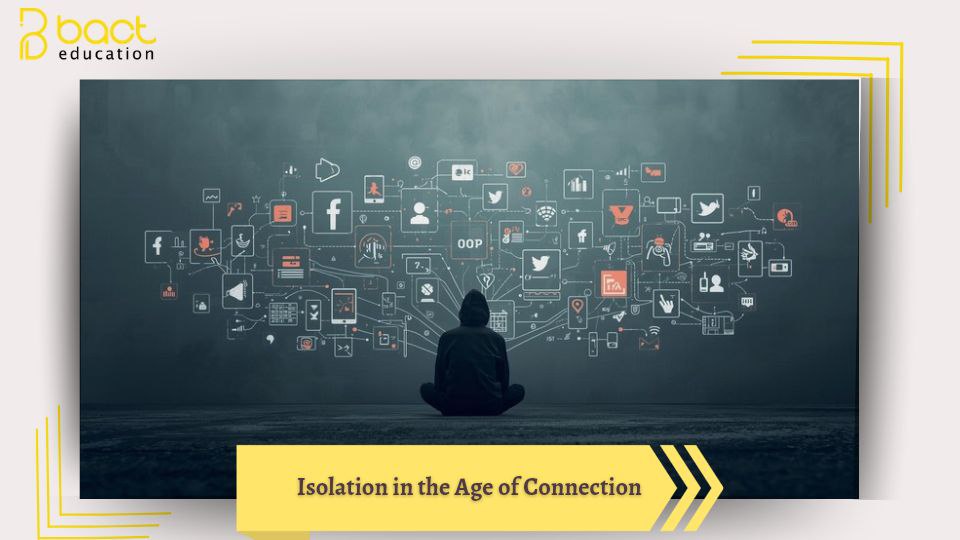
We live in the most connected era in human history. Instant messaging apps, social media platforms, video calls, and email have turned the world into a small village we can access with the click of a button. Yet, voices and scientific research increasingly confirm a strange and troubling paradox: we are more isolated and lonely than ever before. How can we be alone in an age of hyper-connectivity? This is the question we will attempt to answer in this article.
**First: The Illusion of Connection in the Digital Age**
Perhaps the most dangerous aspect of modern communication tools is that they have created an “illusion of connection.” Having hundreds of friends on Facebook or thousands of followers on Instagram does not necessarily mean you have real relationships with any of them.
True connection goes far beyond liking a photo, commenting on a post, or sending an emoji. Authentic human communication requires mutual presence, a shared moment of silence, eye contact, a spontaneous laugh, and a warm touch. All these elements disappear behind cold screens. We exchange information and images, but we no longer share feelings and emotions.
As Dr. Sherry Turkle, researcher at MIT and author of “Reclaiming Conversation,” puts it: “We expect more from technology and less from each other. We’ve come to prefer text messages to real conversations because they seem less risky and more controllable, but the price is that we lose our capacity for empathy and deep listening.”
**Second: Quality Versus Quantity in Relationships**
We have fallen into the trap of quantity at the expense of quality. In the past, people contented themselves with a limited number of deep relationships: family, close friends, neighbors. These relationships required time, effort, and emotional investment, but they provided genuine psychological support in times of distress.
Today, we rush to expand our networks, worry if our follower count doesn’t increase, and spend hours responding to comments from strangers, while we may not even know simple details about the neighbor living next door. This fragmentation weakens the quality of our core relationships; we give our best to a virtual audience, leaving only crumbs of time and attention for ourselves and our loved ones.
**Third: The Culture of Constant Comparison and Eroded Trust**
One of the most dangerous effects of social media on mental health is that it creates a fertile ground for constant social comparison. We see our friends’ photos in their best moments: traveling, succeeding, happily married, professionally excelling. We compare our real lives (with all their complexities, failures, and moments of weakness) to others’ filtered, edited, and idealized lives.
This comparison leads to feelings of inadequacy, envy, and depression, pushing many to withdraw further into real isolation. If my life doesn’t measure up to the life I see on screen, why bother participating at all? This feeling is amplified among adolescents and young adults who are still forming their identities.
Furthermore, virtual spaces create an environment of polarization and hostility. Any minor disagreement can escalate into fierce verbal warfare, making people more cautious and withdrawn, and reducing their trust in others and in society as a whole.
**Fourth: Isolation as a Choice or as an Illness?**
It’s important here to distinguish between two types of isolation: positive isolation (or solitude), which one chooses for reflection, meditation, and creativity, and negative isolation (loneliness), imposed by social and psychological circumstances.
Positive solitude has always been part of human culture; it’s essential for self-growth and renewal. But what we experience today is not solitude; it’s alienation. We are surrounded by never-ending voices, images, and messages, yet we are deeply alone. We lack safe spaces where we can be our true selves without masks or pretense.
**Fifth: How Do We Break This Cycle?**
Breaking free from the isolation of the digital age requires awareness and will. Here are some suggestions:
1. **Periodic Digital Fasting:** Set aside daily or weekly times when you completely disconnect from screens. An hour before bed, or a day on the weekend, can make a huge difference.
2. **Reclaim the Art of Conversation:** Try replacing text messages with a short phone call, or a face-to-face meeting when possible. Practice listening attentively and speaking sincerely.
3. **Curate Your Follow List:** Don’t hesitate to unfollow any account that makes you feel dissatisfied with your life or causes you anxiety. Make your digital space healthy and inspiring.
4. **Focus on Deep Relationships:** Invest your time and effort in strengthening relationships with the people who truly matter in your life. One deep relationship is worth more than a hundred superficial ones.
5. **Engage in Real-World Activities:** Seek out hobbies, groups, and activities that bring you together with others in the physical world: team sports, a book club, volunteer work, or even a walk with friends in nature.
**Conclusion:**
Isolation in the age of connection is not an inevitable fate. It is the product of our daily choices and how we use technology. We can reclaim the warmth of genuine human relationships if we realize that communication tools should remain just that—tools—and not become a substitute for life itself. The greatest challenge of our digital age is not to be connected, but to remain human.
