
#### Introduction
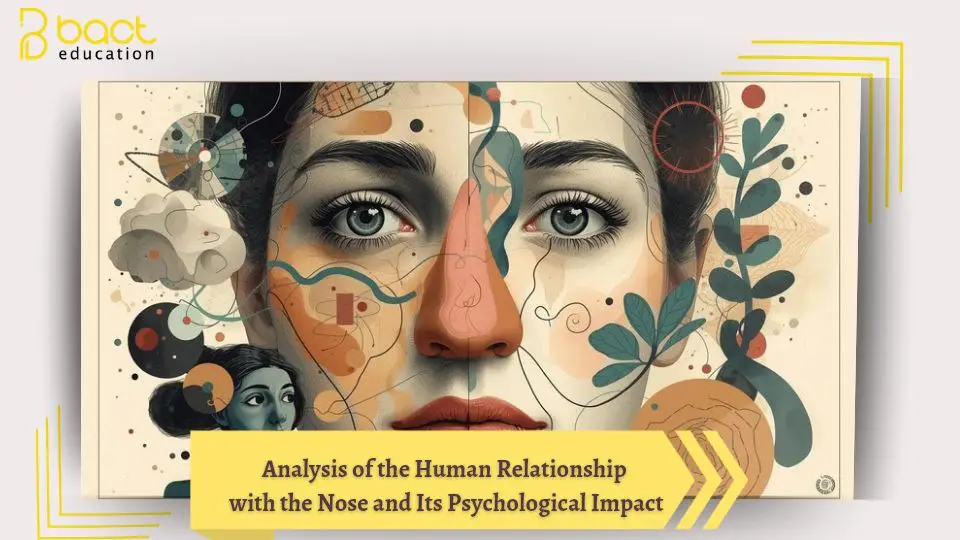
The nose holds a central position on the face, not only anatomically and functionally as the organ for breathing and smelling, but also aesthetically and symbolically. Since the dawn of history, humans have accorded great importance to the nose; it has been a subject of adornment and tattooing in primitive cultures, a focal point of beauty standards in ancient philosophies, and a key issue in modern cosmetic surgery. Analyzing the relationship between a person and their nose reveals deep layers of psychological and cognitive interaction, where this protruding organ becomes a mirror reflecting self-image, social interactions, feelings of anxiety and confidence, and even one’s existential identity.
#### First: The Nose as a Center of Bodily Identity
In psychology, the face is considered a person’s identity card to the outside world. Given the nose’s central location, it plays a crucial role in forming first impressions. The human brain is wired to notice symmetry and balance, and any slight deviation in the shape or size of the nose can be internally translated into a feeling of being “flawed.” This perception is not just about objective shape, but about how an individual internalizes their physical self-concept (body image). This is a complex psychological construct formed since childhood and influenced by parental opinions, peer comments, and media messages.
#### Second: The Nose and Social Interaction (The Looking-Glass Self)
The psychological impact of the nose can be understood through sociologist Charles Cooley’s “Looking-Glass Self” theory, which posits that a person’s self-concept is shaped by their perception of how others view them. Here, the nose becomes a pivotal element in this equation. A person who believes their nose is too large or misshapen often anticipates being the subject of ridicule or scrutiny. This anticipation can lead to social avoidance behaviors, intense shyness, or even social phobia. This anxiety does not necessarily stem from real reactions from the outside world, but from the individual’s internal projections.
#### Third: The Nose, Gender, and Cultural Identity
Psychologists and anthropologists have observed that concern with the nose varies across genders and cultures. In many societies, stricter beauty standards are imposed on women, making them more susceptible to anxiety about the size and shape of their noses. Conversely, a strong or prominent nose in men might be associated with masculinity and power in some cultures. Furthermore, the nose carries ethnic and racial connotations; a nose characteristic of a particular ethnic group can be a source of pride and identity, or in contexts of cultural conflict and threatened identity, it can become a source of self-hatred and a desire for change (such as undergoing cosmetic surgery to “mask” ethnic features).
#### Fourth: Imagined Nasal Deformity (Body Dysmorphic Disorder)
The psychological impact of the nose reaches its peak in mental health conditions like Body Dysmorphic Disorder (BDD). Some individuals suffer from a preoccupation with the idea that their nose is deformed or ugly, even though its appearance is normal or the flaw is so minor that it goes unnoticed by others. This obsession can completely disrupt daily life and lead to repeated cosmetic surgeries that never yield psychological satisfaction, because the problem lies not in the nose’s shape, but in a distorted mental body image.
#### Fifth: Conclusion: From Cosmetic Enhancement to Self-Acceptance
The relationship with the nose is a complex journey between the physical and the psychological. With the advancement of humanistic psychology, the focus is shifting towards promoting “self-acceptance” and a “positive body image.” This does not mean denying the desire for self-improvement, but rather understanding the motivations behind this desire. Is it stemming from an internal wish to feel harmonious with oneself, or is it a response to external pressures and harsh societal standards? Analyzing this relationship invites us to reconsider the way we view our noses, not merely as functional organs or artistic features on our face, but as an integral part of our personal and human story.
