
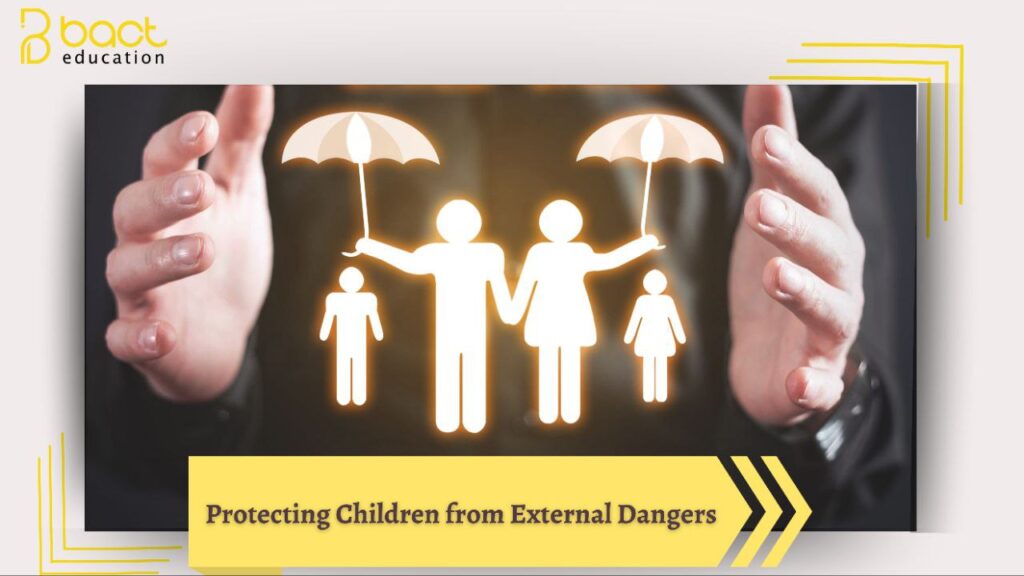
A Comprehensive Guide for Parents
## English Section
### Introduction
In an era of global connectivity and rapid technological advancement, protecting children from external dangers has become a complex task requiring awareness, flexibility, and multi-dimensional strategies. Today’s risks extend beyond the immediate physical environment to digital spaces and complex social interactions. This article provides a comprehensive guide to child protection in today’s world.
### Main Types of External Dangers
#### 1. Digital and Internet Risks
– **Exposure to inappropriate content**: Violence, pornography, hate speech
– **Cyberbullying**: Harassment through social media platforms and online games
– **Exploitation and blackmail**: By bullies or criminals exploiting children’s innocence
– **Digital addiction**: Impact of excessive use on mental and physical health
#### 2. Physical Dangers in the External Environment
– **Road accidents**: While walking, cycling, or using transportation
– **Kidnapping and assault**: In public places, parks, and schools
– **Environmental hazards**: At beaches, swimming pools, natural areas
– **Exposure to harm**: From peers or adults in outdoor activities
#### 3. Psychological and Social Risks
– **Face-to-face bullying**: At school, clubs, or neighborhood
– **Negative peer influence**: Pushing children toward risky behaviors
– **Emotional exploitation**: By adults exploiting children’s need for attention
### Comprehensive Protection Strategies
#### 1. Smart Preventive Parenting
– **Open communication**: Building trusting relationships that enable children to disclose uncomfortable situations
– **Gradual education**: Providing age-appropriate information about risks without causing terror
– **Teaching refusal skills**: How to say “no” confidently in uncomfortable situations
– **Problem-solving training**: Empowering children to handle challenges wisely
#### 2. Smart Monitoring Tools
– **Balanced digital monitoring**: Using parental control software while respecting children’s privacy
– **Establishing clear rules**: For internet and electronic device use
– **Knowing your child’s friends**: Both online and in real life
– **Reviewing privacy settings**: On all devices and applications used by the child
#### 3. Creating a Safe Environment
– **Securing home and surroundings**: Windows, stairs, furniture, and electrical appliances
– **Teaching outdoor safety**: Rules for dealing with strangers, asking for help, identifying safe places
– **Emergency training**: What to do if lost, facing kidnapping attempts, or encountering imminent danger
– **Identifying safe neighborhood places**: Stores, trusted neighbors’ homes, security centers
#### 4. Community Cooperation
– **Communication with school**: Understanding protection policies and prevalent problems
– **Cooperation with other parents**: Exchanging experiences and concerns
– **Utilizing specialized organizations**: Child protection associations, helplines
### Risks and Practical Solutions Table
| Risk Type | Warning Signs | Preventive Measures |
|———–|————–|———————|
| Cyberbullying | Sudden withdrawal, fear of phone, changes in sleep habits | Monitor digital activity, teach not to share personal information |
| Kidnapping risk | Attempted approaches by strange adults, unexplained gifts | Teach “No, Go, Tell” rule, establish safe routes to school |
| Digital addiction | Neglecting duties, declining academic performance, sleep disorders | Set screen time limits, encourage alternative hobbies |
### Technology’s Role in Protection
Smart applications can be used for positive purposes:
– **Location tracking apps** to check children’s whereabouts (with their knowledge and consent)
– **Parental monitoring software** that filters content and limits usage time
– **Reporting platforms** for risks and harmful content
### Conclusion
Protecting children from external dangers is not about complete isolation from the world, but rather about empowerment and preparation. A protected child is not one confined to a sterile environment, but one trained to recognize dangers, equipped with skills to avoid them, and prepared to seek help when needed. Balancing freedom and safety is the greatest parenting art in our age.
###
