
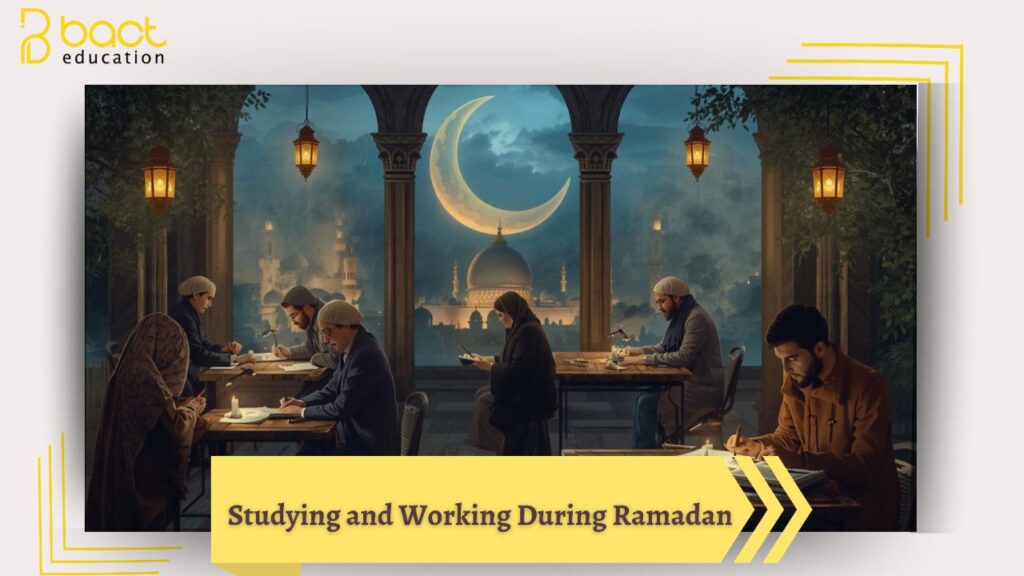
Balancing Worship and Productivity
## Introduction
Ramadan presents a golden opportunity for Muslims to draw closer to God through fasting and worship. However, this year it coincides with intense academic and professional commitments for many. How can one balance the demands of work or study with the spiritual benefits of this holy month? This question preoccupies many, especially given today’s fast-paced lifestyle.
## Main Challenges
### 1. Physical and Mental Fatigue
Changes in sleep and eating patterns affect energy levels during the day, which may impact concentration and productivity at work or in studies.
### 2. Time Management
Between Taraweeh prayers, Tahajjud, and Suhoor, the Ramadan day becomes completely different, requiring a complete reorganization of the daily schedule.
### 3. Dual Pressure
Many experience dual pressure: the pressure of spiritual commitment and the pressure of professional or academic obligations, which can cause stress if not managed properly.
## Success Strategies
### Advanced Planning
– **Set a realistic schedule**: Allocate specific times for work, study, worship, and rest.
– **Prioritize tasks**: Identify the most important tasks for times when energy is at its peak (usually a few hours after Iftar).
### Energy Management
– **Adjust work hours**: If possible, negotiate flexible hours or remote work.
– **Take short breaks**: After every 90 minutes of work, take a 10-minute break for prayer or rest.
– **Focus on nutrition**: A balanced Suhoor meal rich in protein and fiber helps maintain energy throughout the day.
### Supportive Environment
– **Communicate with teachers or supervisors**: Inform them about Ramadan and request some accommodations if necessary.
– **Create a suitable work environment**: Dimming bright lights and reducing distractions can help conserve energy.
### Integrating Worship and Work
– **Listen to Quran or religious lectures** during routine tasks.
– **Utilize waiting times** for remembrance and supplication.
– **Make the workplace/study area** a place of worship by maintaining purity and sincerity of intention.
## Unexpected Benefits
Many may find that working or studying during Ramadan carries unexpected benefits, such as:
– Increased concentration due to better time management
– Mental clarity through fasting
– Development of time management and self-discipline skills
– A deeper sense of sincerity when work becomes part of worship
## Conclusion
Ramadan is not an excuse for delay or negligence in worldly duties, but an opportunity to develop our skills in managing priorities and achieving integration between different aspects of our lives. With good organization and sincerity of intention, challenges can be transformed into opportunities for both spiritual and professional growth, making Ramadan a launching pad for a more balanced and productive individual.
