
A Practical Guide to Smart Containment**
**Introduction:**
A child’s anger is not rebellion against the mother, nor is it a personal attack. It is a distress signal—a cry of helplessness when the child cannot contain an overwhelming flood of emotion. The mother is the primary translator of this cry and the safe haven the child is secretly seeking, even in their fiercest rage. But the harder question is: How should she act in that moment? Does she meet anger with anger? Withdraw? Or give in? The answer is not in a single choice, but in a smart methodology that balances firmness with tenderness.
**Step One: The Mother Starts with Herself (Self-Regulation)**
Before anything else, the mother must stop reacting impulsively. If she becomes triggered too, the situation turns into a double storm. She must take a deep breath and remind herself that her child’s anger is not an attack on her, but a moment of vulnerability where the child needs a calm role model. She tells herself: “I am the safe container, not the raging wave.” This self-awareness is the most critical step, as it defuses the crisis at its very root.
**Step Two: Acknowledge and Name the Emotion (Emotional Validation)**
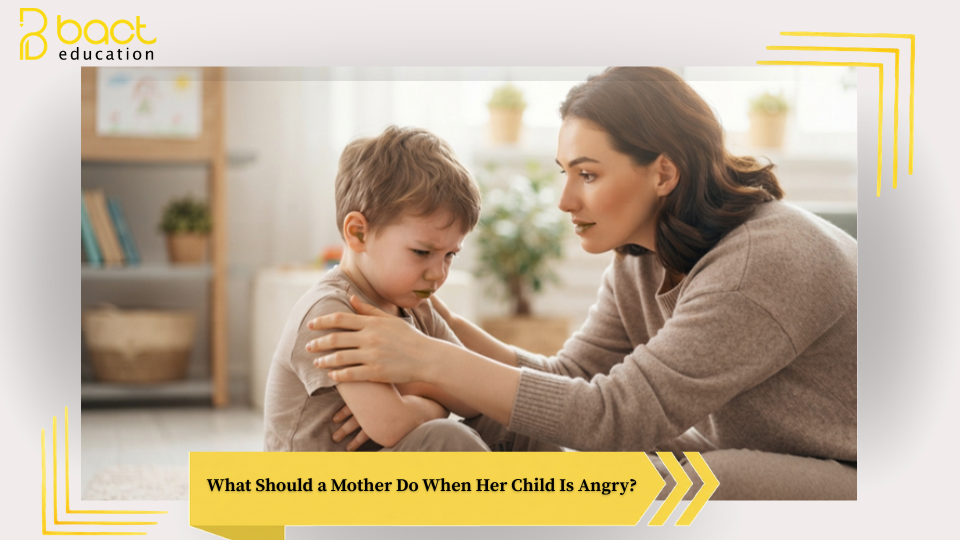
An angry child needs to see their feelings reflected in their mother’s eyes without fear or denial. The mother should lower herself to the child’s eye level and say in a calm yet firm voice: “I can see you are very angry right now, and it seems like it’s because…” Naming emotions (like anger, frustration, jealousy, or exhaustion) regulates the emotional brain and makes the child feel understood, not crazy. This acknowledgment magically reduces the intensity of the rage.
**Step Three: Separate the Feeling from the Behavior (Setting Boundaries)**
Here comes the most important educational role. The mother must affirm to her child that “Feeling angry is always allowed, but aggressive behavior is never allowed.” If the child hits, breaks things, or uses foul language, the mother must set a clear limit with a firm voice (not a yelling one): “I understand you are angry, but you cannot hit me or break things. That is not allowed.” This teaches the child that their mother loves them even in their anger, but she respects herself and the house rules and will not tolerate violations.
**Step Four: Stay Close (Presence, Not Withdrawal)**
A major mistake some mothers make is leaving the child alone in their anger (“Go to your room until you calm down!”). In moments of rage, the child fears the disconnection of the relationship. The healthier approach is for the mother to stay physically nearby (a few steps away), sit beside them without talking, and remain available. She might say, “I am right here beside you; whenever you want a hug, I am ready.” This presence restores the child’s fundamental sense of safety.
**Step Five: Dialogue After Calm (Learning from the Storm)**
When the nerves have settled and the hormones have stabilized, the time for constructive dialogue arrives. This is the golden moment for learning. The mother should open a calm discussion: “What were you feeling? What triggered you? And what could we do differently next time instead of screaming or hitting?” Here, the mother transitions from being a firefighter to being a teacher. She teaches her child problem-solving skills and makes them a partner in finding solutions.
**Conclusion:**
A child’s anger is a golden opportunity for the mother to teach them life’s greatest lessons: that feelings are not to be feared, that love does not waver in storms, and that there is always a healthy way to deal with pain. When the mother chooses awareness over reaction, presence over punishment, and understanding over scolding, she is not just calming a fleeting tantrum. She is building in her child a psychological immune system capable of facing life’s ups and downs for a lifetime.
