
## Introduction
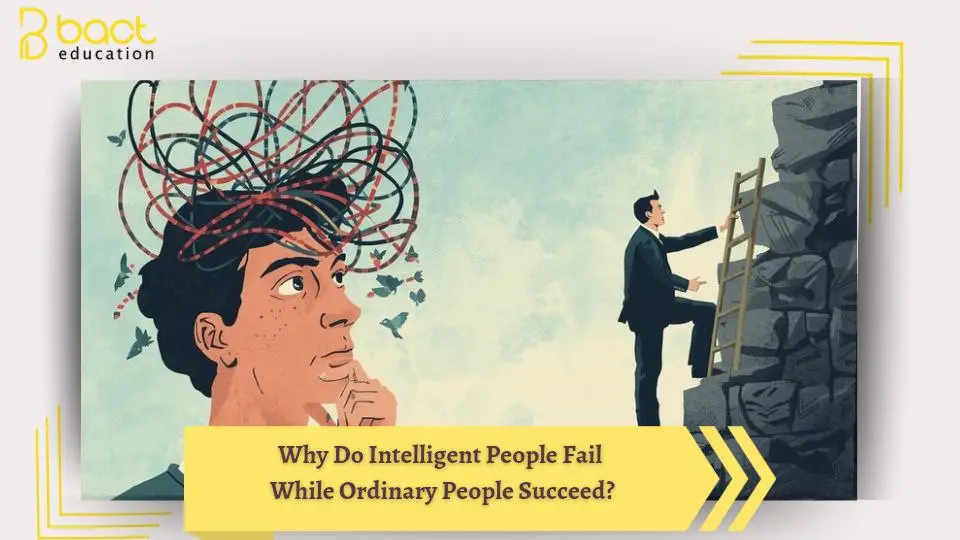
One of life’s paradoxes is that some highly intelligent individuals may fail to achieve success, while ordinary people accomplish great things. This phenomenon raises questions: What are the real factors behind success? Is intelligence alone sufficient for achievement?
## Intelligence Is Not Everything
### Emotional and Social Intelligence
Intelligent people often lack emotional intelligence—the ability to understand and manage their own emotions and those of others. Meanwhile, “ordinary” people possess social skills that enable them to:
– Build strong relationships and support networks
– Collaborate effectively with others
– Resolve conflicts constructively
### Overconfidence
Intelligent people sometimes tend to:
– Rely solely on their intelligence without developing other skills
– Underestimate effort and perseverance
– Expect easy success without preparing for failure
## Real Factors of Success
### Perseverance and Determination
Success requires:
– Continuing despite failure
– Learning from mistakes
– Consistent hard work
These qualities are often stronger than raw intelligence.
### Humility and Learning Ability
The successful “ordinary” person:
– Admits ignorance and asks for help
– Continuously learns from others
– Develops themselves in needed areas
### Time Management and Organization
Success requires:
– Setting clear goals
– Organizing time effectively
– Committing to established plans
## Intelligence Can Be an Obstacle
### Boredom and Lack of Focus
Intelligent people may:
– Feel bored quickly with routine tasks
– Move between multiple interests without mastering any
– Lack the patience needed for achievement
### Fear of Failure
Intelligence can lead to:
– High expectations from oneself and others
– Fear of taking risks and avoiding challenges
– Excessive sensitivity to criticism
### Overthinking
Intelligent people tend to:
– Overanalyze situations
– Hesitate in decision-making
– Complicate simple matters
## Practical Intelligence vs. Theoretical Intelligence
### Application Matters More Than Knowledge
Successful ordinary people:
– Focus on practical application
– Learn from direct experience
– Transform ideas into reality
### Adaptability
Success requires:
– Adapting to changes
– Quick learning from new situations
– Flexibility in thinking and action
## Real-Life Examples
### Success Stories of Ordinary People
Many successful entrepreneurs weren’t the smartest in their classes, but they excelled in:
– Perseverance and determination
– Ability to build integrated teams
– Learning from mistakes and failure
### Failure of Intelligent People
Historically, there are examples of highly intelligent individuals who achieved little due to:
– Social isolation
– Inability to work within a team
– Intellectual arrogance
## Other Important Factors for Success
### Environment and Support
Success requires:
– A supportive and encouraging environment
– Available opportunities for learning and growth
– Presence of mentors and role models
### Luck and Timing
The role of:
– Right circumstances at the right time
– Opportunities that come to some but not others
– Unexpected external factors cannot be denied
### Mental and Physical Health
Sustainable success requires:
– Good mental health
– Work-life balance
– Ability to handle pressure
## How Can Everyone Achieve Success?
### Developing Multiple Intelligences
Instead of focusing only on academic intelligence, develop:
– Emotional and social intelligence
– Practical and applied intelligence
– Creative and innovative intelligence
### Building Successful Habits
Important habits include:
– Reading and continuous learning
– Setting and writing down clear goals
– Reviewing and improving performance
### Learning from Failure
Failure is not the end but:
– An opportunity to learn and grow
– A lesson in humility and patience
– Motivation to work better
## Conclusion
Success is not exclusive to the intelligent, nor is intelligence a guarantee of failure. The real difference is made by a combination of perseverance, emotional intelligence, ability to learn from mistakes, and hard work. “Ordinary” people who succeed are often those who realize that success is a journey requiring continuous self-development, not just reliance on an innate talent or ability.
True intelligence is knowing how to use your abilities, compensate for your shortcomings, learn from those around you, and keep trying until you achieve what you aspire to.
