
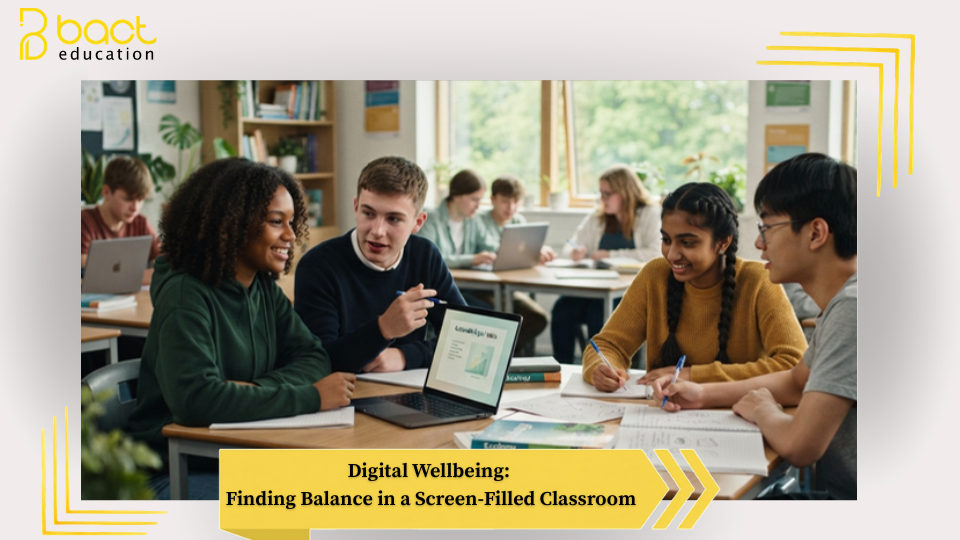
Digital Wellbeing:
Finding Balance in a Screen-Filled Classroom
In today’s classrooms, learning often comes with a glow—the light of screens, tablets, and digital boards guiding lessons forward. Technology has opened doors to endless information, interactive learning, and global connection.
But alongside these opportunities comes a quieter concern:
How do we ensure that while students stay connected, they also stay well?
Because digital learning, when unbalanced, can blur the lines between engagement and exhaustion.
More Than Just Screen Time
Digital wellbeing is not simply about reducing hours spent on devices. It’s about how technology is used, why it is used, and how it makes students feel.
A student can spend hours online and feel inspired—or overwhelmed. Focused—or distracted. Connected—or isolated.
The difference lies in balance and intention.
What Does Digital Wellbeing Look Like in Schools?
Creating a healthy digital environment doesn’t require removing technology—it means using it mindfully. In many classrooms, this includes:
- Structured screen breaks to rest the eyes and mind
- Blending digital activities with hands-on, offline learning
- Teaching students about responsible and safe online behavior
- Encouraging focus, rather than constant multitasking
- Open conversations about how screen use affects mood and concentration
These small shifts help students build awareness—not just of technology, but of themselves.
The Hidden Impact
Extended screen use can affect sleep patterns, attention spans, and even emotional wellbeing. Constant notifications and fast-paced content can make it harder for young minds to slow down and reflect.
Without guidance, students may struggle to manage this digital flow.
But with the right support, they can learn to navigate it with confidence and control.
The UAE’s Forward Approach
In the UAE, education continues to embrace innovation while recognizing the importance of balance. Schools, guided by frameworks from organizations like the Knowledge and Human Development Authority, are increasingly integrating digital tools alongside wellbeing initiatives.
The focus is not just on digital advancement—but on ensuring that students remain healthy, mindful, and engaged learners.
The Role of Families
At home, digital habits are shaped just as strongly. Simple practices—like setting screen-free times, encouraging outdoor play, or having device-free conversations—create a healthy rhythm.
When children see balance at home and at school, it becomes a natural part of their routine.
Creating Conscious Users, Not Just Consumers
Technology is here to stay, and rightly so—it enriches learning in powerful ways. But our goal is not just to create students who can use devices.
It is to nurture individuals who can manage them.
Who know when to engage—and when to unplug.
Because true digital learning is not about staying online all the time—it’s about knowing when to log in, and when to simply be present.
