
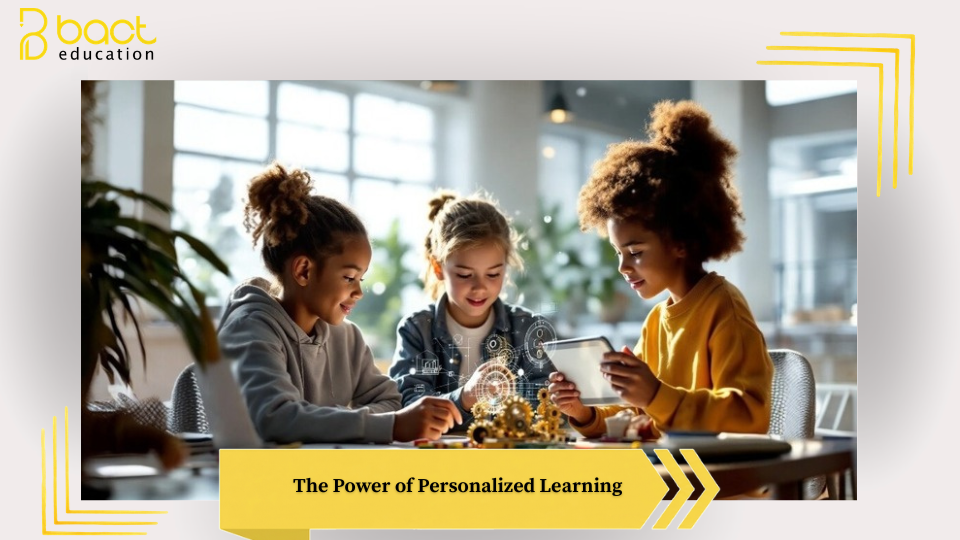
The Power of Personalized Learning
◼Every learner is unique, yet traditional teaching often applies a one-size-fits-all approach. Personalized learning challenges this model by tailoring instruction to meet each student’s strengths, challenges, and pace. In the UAE, where innovation in education is a national priority, personalized learning is gaining momentum as schools adopt modern tools and methodologies.
◼Technology plays a key role. Adaptive platforms, AI-driven assessments, and digital portfolios allow teachers to monitor progress in real time and design learning paths that match individual needs. For instance, a student struggling with mathematics can receive targeted practice, while another excelling in science can explore advanced projects. This ensures that no learner feels left behind or unchallenged.
◼However, personalization is not limited to technology. It also includes understanding learners’ interests, offering choice in assignments, and encouraging student voice. Teachers act more as facilitators—guiding students to set goals, reflect on progress, and take ownership of their learning journey. Parents, too, can support by recognizing their child’s learning style and collaborating with schools to strengthen outcomes.
◼The impact of personalized learning is profound. Students feel more motivated, engaged, and confident because they see their unique learning paths valued. It promotes self-direction, a crucial skill for lifelong success. Schools that embrace personalized learning not only raise achievement but also prepare adaptable, independent learners ready for the challenges of the 21st century. By recognizing individuality, education becomes not just effective—but transformative.
